

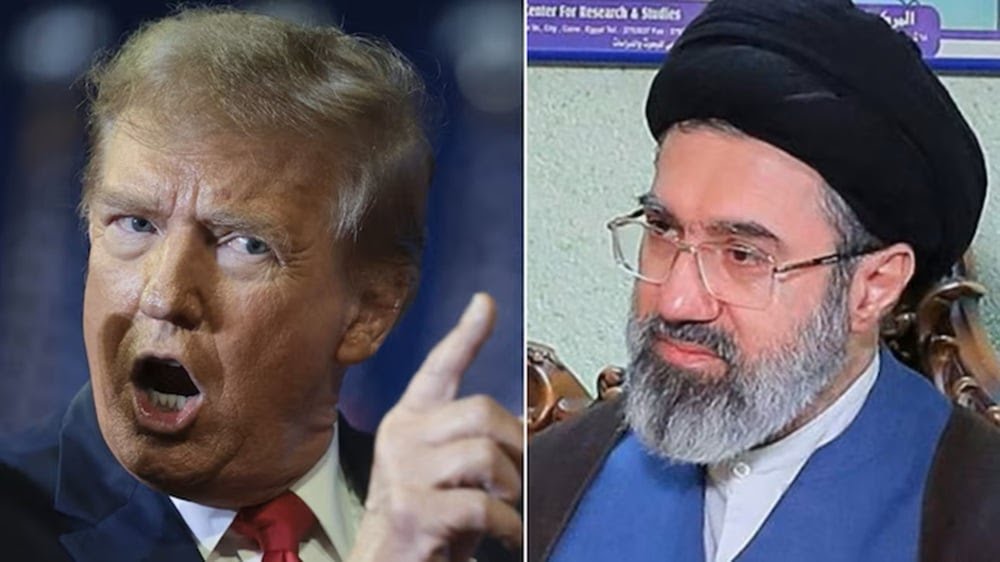
Oil prices climbed sharply on Monday after United States President, Donald Trump, rejected Iran’s response to a U.S. peace proposal, raising fears that the prolonged conflict could continue disrupting global energy supplies through the Strait of Hormuz.
The latest development came after Washington recently presented a proposal aimed at reviving negotiations and halting the conflict that has dragged on for more than 10 weeks.
Iran responded on Sunday with conditions centred on ending the war across multiple fronts, particularly in Lebanon, where Israel continues military operations against Hezbollah fighters backed by Tehran.
The Iranian response also demanded compensation for damages caused by the war and reaffirmed Tehran’s sovereignty over the Strait of Hormuz, according to Iranian state television.
Want to stay updated about everything in NIGERIA?
Click the button below to join our WhatsApp group...

Iran further urged the United States to end its naval blockade, lift sanctions, stop restrictions on Iranian oil exports and guarantee that no further attacks would occur, the semi-official Tasnim news agency reported.
Trump, however, quickly dismissed the proposal in a social media post.
“I don’t like it — TOTALLY UNACCEPTABLE,” Trump wrote on Truth Social, without giving further detail.
Washington’s proposal had reportedly focused on securing a ceasefire before opening negotiations on more sensitive issues, including Iran’s nuclear programme.
Following Trump’s rejection, oil prices surged by more than $4 per barrel on Monday as concerns intensified over continued restrictions in the Strait of Hormuz, a critical global shipping route that previously handled about one-fifth of the world’s oil and liquefied natural gas supplies before the conflict erupted on February 28.
“The oil market continues to trade like a geopolitical headline machine, with prices swinging sharply based on every comment, rejection, or warning coming from Washington and Tehran,” said Priyanka Sachdeva, senior market analyst at Phillip Nova.Although shipping activity through the Strait of Hormuz remains significantly reduced, tracking data from Kpler and LSEG showed that three crude oil tankers managed to leave the waterway last week with their tracking systems switched off to avoid possible Iranian attacks.
The ongoing war has also become increasingly unpopular among American voters as fuel prices continue to rise ahead of nationwide elections scheduled in less than six months, which will determine whether Trump’s Republican Party maintains control of Congress.
International support for the U.S. position has also remained limited, with NATO allies reportedly refusing requests to deploy naval forces to reopen the Strait of Hormuz without a broader peace agreement and an internationally backed mission.
Uncertainty also remains over Washington’s next diplomatic or military move.
Trump is expected to arrive in Beijing on Wednesday, where discussions with Chinese President Xi Jinping are expected to include the Iran conflict and the worsening global energy crisis.
The U.S. president has continued to pressure China to use its influence over Tehran to push for an agreement with Washington.
Addressing whether combat operations against Iran were over, Trump said in remarks aired on Sunday: “They are defeated, but that doesn’t mean they’re done.”
Israeli Prime Minister Benjamin Netanyahu also signalled that military operations were far from over, saying additional steps were needed to address Iran’s enriched uranium stockpile, nuclear facilities, missile capabilities and regional allies.
The best way to remove the enriched uranium would be through diplomacy, Netanyahu said in an interview that aired Sunday on CBS News’ “60 Minutes.” But he did not rule out removing it by force.
Iranian President Masoud Pezeshkian also struck a defiant tone, declaring in a social media post that Iran would “never bow down to the enemy” and would “defend national interests with strength.”
Despite ongoing diplomatic efforts, tensions across the region have remained high, especially around key shipping routes.
Recent fighting near the Strait of Hormuz has marked some of the most serious escalations since a ceasefire was declared in early April.
On Sunday, the United Arab Emirates said it intercepted two drones launched from Iran, while Qatar condemned a drone strike on a cargo ship travelling from Abu Dhabi through its waters. Kuwait also confirmed that its air defence systems intercepted hostile drones that entered its airspace.
Fighting has also continued in southern Lebanon between Israel and Hezbollah despite a U.S.-brokered ceasefire announced on April 16.Netanyahu stated during the “60 Minutes” interview that even if hostilities with Iran end, fighting in Lebanon may continue. He also admitted that Israeli planners initially underestimated Iran’s ability to disrupt traffic through the Strait of Hormuz.
“It took a while for them to understand how big that risk is, which they understand now,” he said.
(Reuters)
Want to stay updated about everything in NIGERIA?
Click the button below to join our WhatsApp group...







Leave a comment