

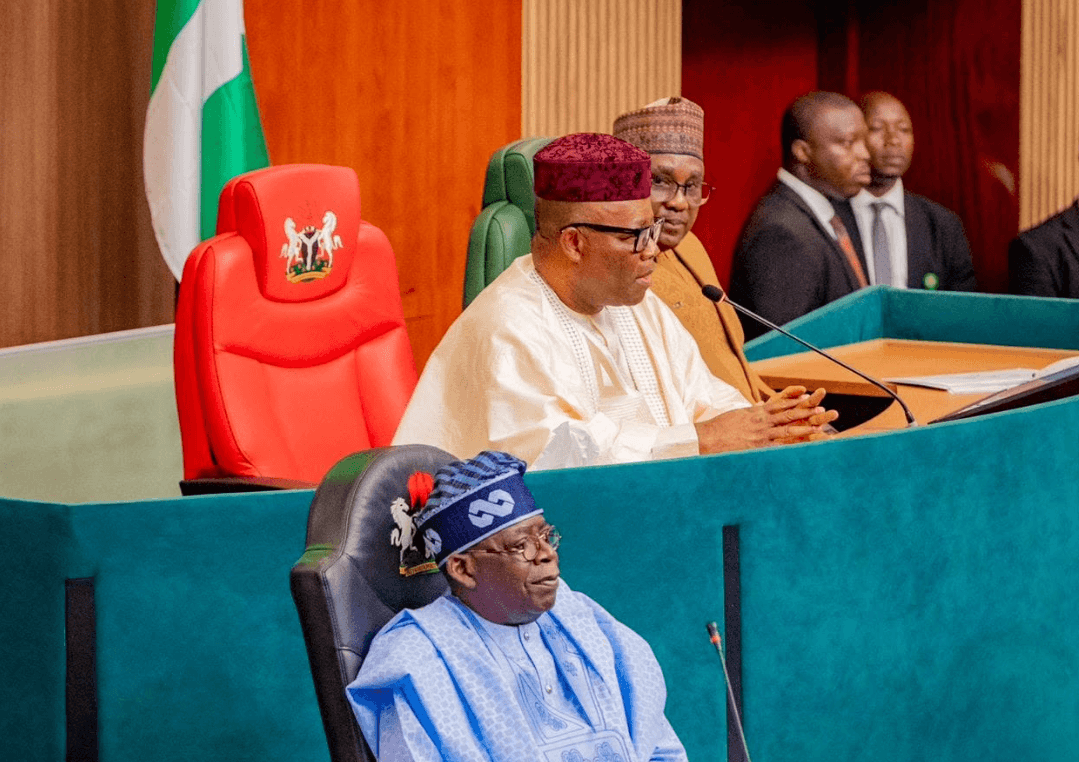
A Federal High Court sitting in Lagos has thrown out the controversial ₦110 billion vehicle and allowance scheme of the National Assembly, declaring that the spending violated Nigeria’s procurement laws, constitutional provisions, and principles of public accountability.
The court held that the allocation of ₦40 billion for 465 bulletproof SUVs for lawmakers and another ₦70 billion in “support allowances” for newly elected legislators was arbitrary, excessive, and amounted to a breach of public trust at a time of severe economic hardship in the country.
Delivering judgment on Wednesday, May 6, 2026, Justice Yellim Bogoro ruled that the procurement process failed to meet due process requirements and could not be justified under any stretch of legislative autonomy.
The case, Suit No. FHC/L/CS/1606/2023, was filed by the Socio-Economic Rights and Accountability Project (SERAP) against the leadership of the National Assembly.
Want to stay updated about everything in NIGERIA?
Click the button below to join our WhatsApp group...

A certified true copy of the judgment, sighted on Sunday, has now brought fresh attention to the ruling.
In strong terms, Justice Bogoro described the spending pattern as “arbitrary, disproportionate and inconsistent with statutory procurement standards,” adding that lawmakers stood in a clear conflict of interest since they directly benefited from the approvals they made.
“The beneficiaries of the expenditure are the very officials approving it,” the judge said. “This constitutes self-dealing and conflict of interest.”
The court further held that public office is a fiduciary responsibility that must be exercised in line with constitutional oath and the public interest, stressing that “public office must not be used for personal enrichment.”
Justice Bogoro also rejected arguments that the suit was invalid due to legislative autonomy, stating that separation of powers does not protect illegality.
“It is noteworthy that the court is concerned with the legality and constitutionality of legislative spending,” she said, affirming that courts retain jurisdiction where public funds and constitutional breaches are involved.
The judge also took judicial notice of Nigeria’s harsh economic conditions, noting that approving such a huge expenditure for lawmakers, in the middle of widespread hardship, reflected a failure to prioritise national interest.
She further dismissed objections raised by the defendants over jurisdiction, pre-action notice, and claims that the case had become “academic,” ruling instead that SERAP had the legal standing to institute the action as a public interest organisation.
On locus standi, the court affirmed the growing recognition of public interest litigation in Nigeria, holding that SERAP was entitled to sue on behalf of citizens due to the national importance of the matter.
With respect to procedural objections, the court ruled that while pre-action notice is generally required, exceptions exist in urgent and public interest matters such as this.
Reacting to the judgment, SERAP Deputy Director, Kolawole Oluwadare, described the ruling as a major win for transparency and accountability in governance.
He said the decision reinforces the principle that “public office is a public trust,” and that public funds must be managed with responsibility.
Human rights lawyer, Femi Falana (SAN), also commended the judgment, insisting that lawmakers’ spending choices cannot be justified in the face of worsening economic hardship.
He urged the Revenue Mobilisation Allocation and Fiscal Commission (RMAFC) to strictly enforce its constitutional mandate on remuneration standards for public office holders.
The court ultimately ordered the National Assembly leadership, including Senate President Godswill Akpabio and Speaker Tajudeen Abbas, to ensure that all future spending strictly complies with due process, transparency, accountability, and value-for-money principles.
The ruling has since sparked renewed debate over lawmakers’ pay, public spending priorities, and accountability in Nigeria’s democracy.
Want to stay updated about everything in NIGERIA?
Click the button below to join our WhatsApp group...





Leave a comment