

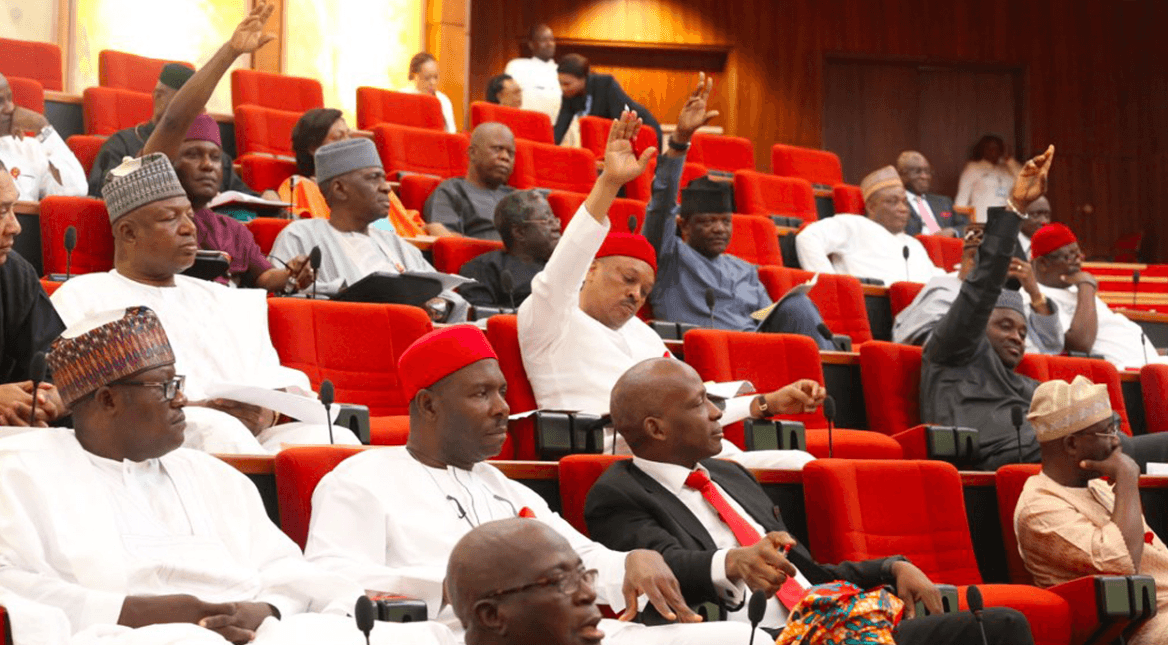
Nigeria’s cryptocurrency space may soon face tighter oversight as the Senate on Tuesday advanced a bill seeking to formally regulate digital assets and Virtual Asset Service Providers (VASPs) across the country.
The proposed legislation (Virtual Asset Service Providers Regulation Bill, 2026) scaled second reading after lawmakers agreed it was necessary to close existing gaps in Nigeria’s fast-growing crypto ecosystem.
Want to stay updated about everything in NIGERIA?
Click the button below to join our WhatsApp group…

If passed into law, the bill will introduce a full regulatory framework covering cryptocurrency exchanges, digital asset operators, and related service providers, including compulsory licensing, transparency standards, and strict compliance rules.
Want to stay updated about everything in NIGERIA?
Click the button below to join our WhatsApp group...
Leading the debate on behalf of the sponsor, Deputy Senate President Jibrin Barau, was Senator Tahir Monguno, who warned that Nigeria’s rapid crypto adoption has far outpaced regulation.
According to him, while Nigeria remains one of Africa’s biggest hubs for cryptocurrency transactions, the absence of a comprehensive legal framework has left investors exposed and created loopholes for illicit financial activities.
Lawmakers who contributed to the debate described virtual assets as “here to stay,” stressing that the global financial system is already shifting toward digital finance. They warned that failure to regulate the sector could push more economic activity into informal and untraceable channels.
Beyond investor protection, senators also highlighted the role of crypto and digital assets in youth employment and innovation, noting that thousands of young Nigerians currently depend on blockchain-related ventures for income.
Deputy Senate President Jibrin Barau also cautioned that operating without proper oversight could open the door to black-market transactions, money laundering risks, and other financial crimes, while slowing Nigeria’s ambition of building a $1 trillion economy.
During the debate, Senator Natasha Akpoti-Uduaghan argued that regulatory uncertainty is already hurting Nigeria’s tech ecosystem, pushing innovative startups to relocate abroad in search of clearer rules.
She warned that the country risks losing billions in potential investments and jobs if it fails to build a predictable legal environment for emerging digital industries.
Backing the bill, Senator Adams Oshiomhole described regulation as “long overdue,” urging the Senate to accelerate its passage.
However, Senator Adetokunbo Abiru called for careful alignment of the new bill with existing financial laws such as BOFIA and the Investments and Securities Act to avoid regulatory clashes.
Presiding over plenary, Jibrin Barau said the bill is designed to strengthen investor protection, improve transparency, and align Nigeria with global standards set by bodies like the Financial Action Task Force (FATF) and the IMF.
The Senate has now referred the bill to the Committee on Capital Market, which is expected to report back within four weeks.
If eventually passed, Nigeria will join countries like South Africa, Kenya, and Ghana in formally regulating cryptocurrency operations – a move lawmakers say could reshape the country’s digital economy landscape.
Want to stay updated about everything in NIGERIA?
Click the button below to join our WhatsApp group…
Want to stay updated about everything in NIGERIA?
Click the button below to join our WhatsApp group...









Leave a comment