

As the 2026 FIFA World Cup gets underway across the United States, Mexico, and Canada, Nigerian football fans will once again watch the tournament from the sidelines.
For the second consecutive World Cup, the Super Eagles failed to qualify, extending a painful period for one of Africa’s traditional football giants.
Yet while Nigeria will not be represented as a nation, its football influence will be impossible to miss.
Across multiple national teams, 16 players with Nigerian heritage are expected to feature at the tournament, underlining the remarkable global footprint of Nigerian football talent.
Want to stay updated about everything in NIGERIA?
Click the button below to join our WhatsApp group...

The 16 Nigerian-Heritage Players at the 2026 World Cup
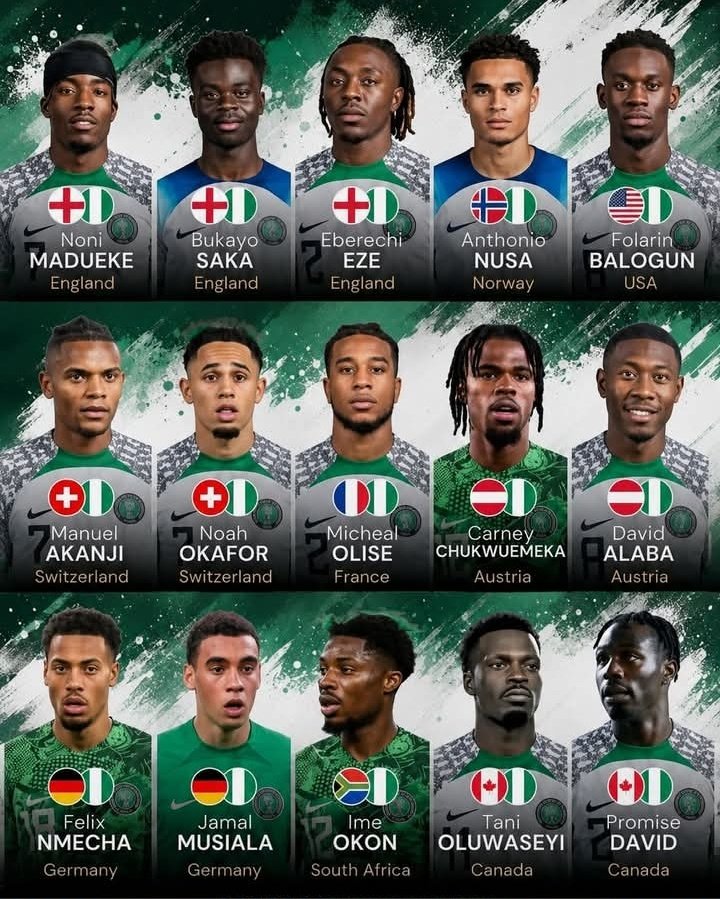
England
- Bukayo Saka
- Eberechi Eze
- Noni Madueke
Germany
- Jamal Musiala
- Felix Nmecha
France
- Michael Olise
Switzerland
- Manuel Akanji
- Noah Okafor
Austria
- David Alaba
- Carney Chukwuemeka
Canada
11. Tani Oluwaseyi
12. Promise David
13. Owen Goodman
Norway
14. Antonio Nusa
South Africa
15. Ime Okon
United States of America
16. Folarin Balogun
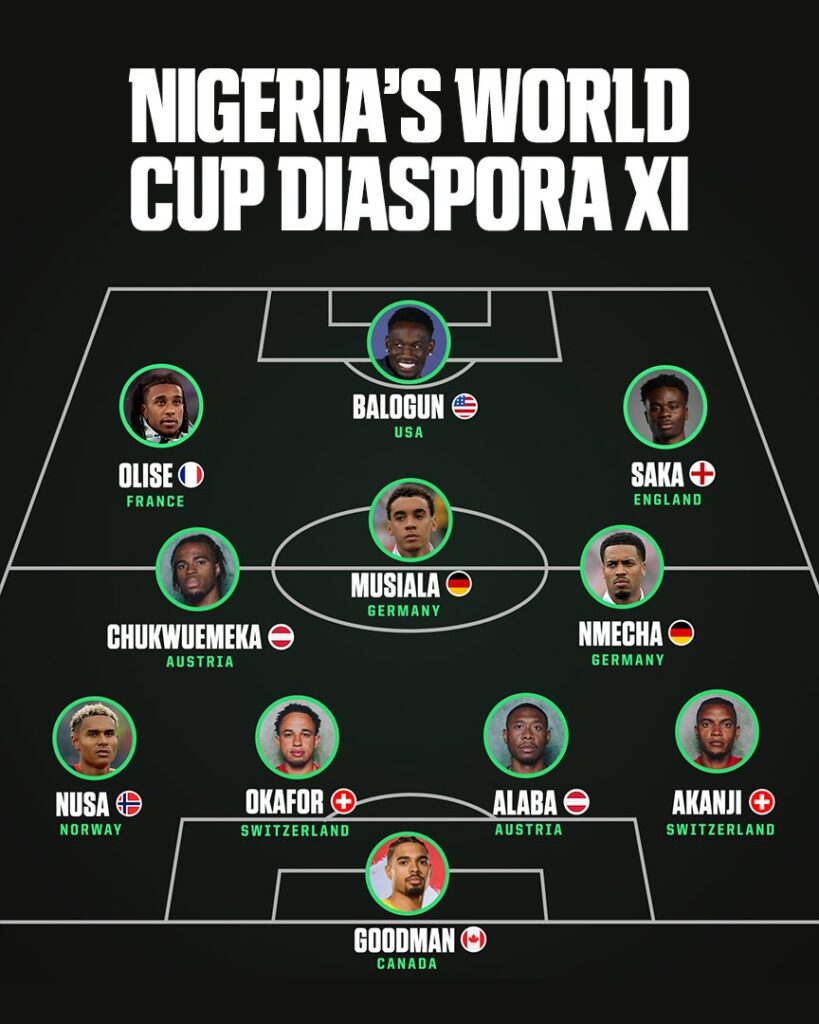
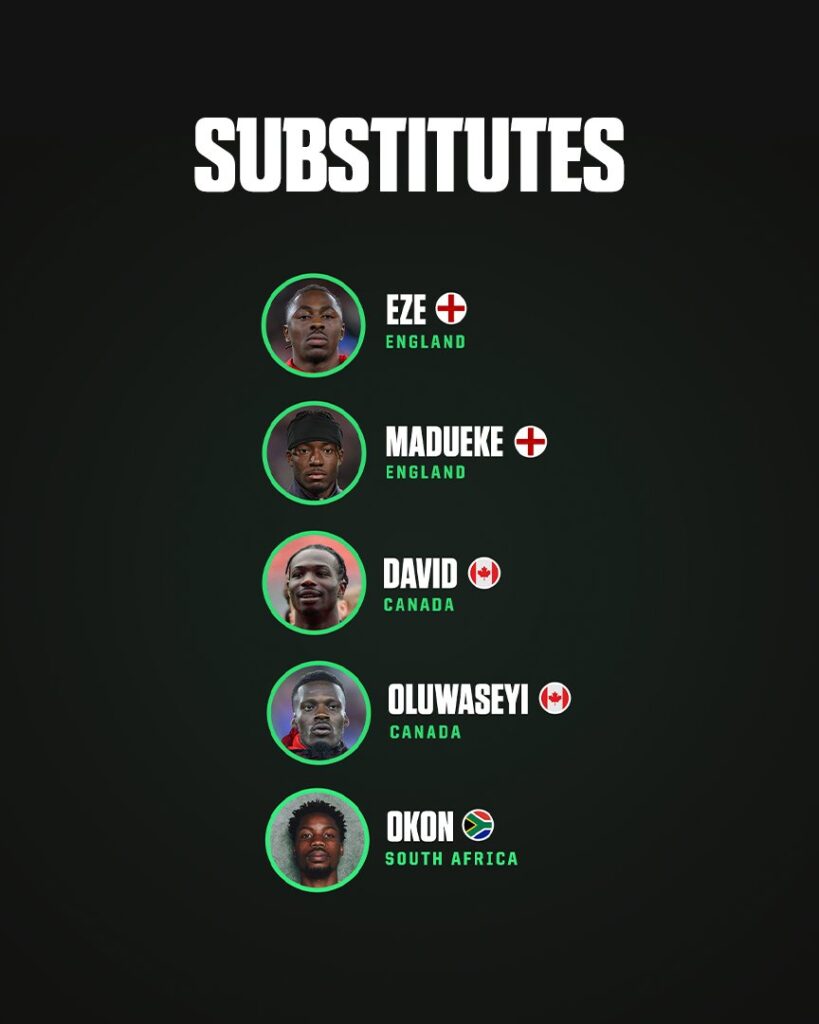
Saka enters the tournament as one of England’s most important attacking threats.
Musiala remains among the most gifted young players in world football, while Olise, Akanji, and Alaba have already established themselves among the game’s biggest stars.
For Nigerian fans, however, the list brings mixed emotions.
On one hand, there is pride in seeing players of Nigerian descent performing on football’s grandest stage.
Their success reflects the immense talent, resilience, and sporting culture that Nigerian families have carried across the world.
On the other hand, their presence highlights uncomfortable questions about Nigerian football itself.
How does a country capable of producing talents of this calibre continue to miss out on major tournaments?
Why are so many players with Nigerian roots finding success elsewhere while the national team struggles to qualify?
The issue goes beyond player nationality choices. Many of these footballers were born and raised abroad and naturally developed strong ties to the countries they now represent.
The bigger conversation is about football development, infrastructure, administration, and long-term planning.
Nigeria continues to produce world-class talent.
The challenge is creating a football system capable of consistently translating that talent into international success.
As the World Cup unfolds over the coming weeks, goals will be scored, trophies contested, and history written by players whose roots can be traced back to Nigeria.
The Super Eagles may be absent from the tournament, but Nigeria’s football DNA remains everywhere.
That reality should be both a source of pride and a reminder of what Nigerian football can achieve when its vast talent pool is matched with the right vision and structure.
Log on to NewKwara Media Online for more…
Want to stay updated about everything in NIGERIA?
Click the button below to join our WhatsApp group...







Leave a comment